

Sustainability · 2025
In this section50 topics
- Sustainability Policy2 items
- Sustainability Goals & UN SDGs3 items
- Policy Review3 items
- Business Value Chain1 item
- Stakeholder Analysis1 item
- Environmental Sustainability — Overview1 item
- Environmental Policy & Guidelines4 items
- Environmental Policy Review1 item
- Energy — Plan & Guidelines2 items
- Energy — Electricity Consumption1 item
- Energy — Fuel Consumption1 item
- Energy — Targets2 items
- Energy — Performance & Outcomes2 items
- Water — Plan & Guidelines2 items
- Water — Withdrawal, Discharge & Consumption1 item
- Water — Targets2 items
- Water — Performance & Outcomes2 items
- Waste — Plan & Guidelines2 items
- Waste — Generation, Disposal & Recycling1 item
- Waste — Targets1 item
- Waste — Performance & Outcomes2 items
- GHG — Plan & Guidelines2 items
- GHG — Emissions1 item
- GHG — Emissions Verification1 item
- GHG — Principles & Standards1 item
- GHG — Targets1 item
- GHG — Performance & Outcomes2 items
- Environmental Legal Incidents1 item
- Social Sustainability — Overview1 item
- Social Policy & Guidelines3 items
- Social Policy Review1 item
- Social — Principles & Standards Practised1 item
- Human Rights Due Diligence1 item
- Employees — Plan & Guidelines3 items
- Employees — Workforce1 item
- Employees — Remuneration & Provident Fund1 item
- Employees — Training & Development1 item
- Employees — Occupational Health & Safety1 item
- Employees — Labour Relations1 item
- Employees — Employee Representation1 item
- Employees — Targets1 item
- Employees — Performance & Outcomes2 items
- Customers — Plan & Guidelines3 items
- Customers — Satisfaction Results1 item
- Customers — Targets1 item
- Customers — Performance & Outcomes1 item
- Community & Social — Plan & Guidelines3 items
- Community & Social — Targets1 item
- Community & Social — Performance & Outcomes2 items
- Law Violation Incidents1 item
Sustainability Policy
Has a Sustainability Policy
Yes
Policy Description
With a commitment to sustainable business development alongside the environment and society throughout the value chain, in line with the expectations of stakeholders, to enhance the quality and potential for the business to grow continuously, have financial stability, and operate responsibly towards society and the environment under the principles of good corporate governance.
In 2025, the Good Corporate Governance and Sustainable Development Working Group has established policies and goals for sustainability management to create clarity for stakeholders in all groups, in all dimensions, and in line with the company's vision, as follows:
1. Operate a business providing maritime transport services with knowledgeable, experienced, and professional personnel, including providing services to customers with sincerity and creating an effective network of business partners.
2. Promote operations in accordance with human rights principles by taking into account human dignity, rights, freedoms, and equality of persons protected under the Constitution of the Kingdom of Thailand and relevant international laws, including respect for local customs and traditions where the company is located.
3. Cultivate and build awareness by adhering to laws and trade regulations, enhancing transparency in management, and supporting the fight against corruption, the prevention of conflicts of interest, and the abuse of power to create maximum and fair benefits for stakeholders.
4. Committed to improving and developing business processes and service delivery, as well as the value chain, according to the principles of quality management throughout the organization to create a quality mindset among the company's personnel, resulting in value creation for customers and sustainable growth in the long term.
5. Care for and prioritize the safety, occupational health, and working environment of employees, partners, customers, and visitors to prevent loss of life and property, as well as injuries or illnesses arising from work.
6. Promote corporate social responsibility and environmental responsibility by supporting and encouraging employees at all levels and stakeholders in all sectors to participate in social responsibility activities or projects to enhance efficiency and effectiveness, including creating value for the company and stakeholders while coexisting with the community and society with well-being.
7. Promote the efficient use of resources, including reducing and controlling impacts on society and the environment, resulting from the company's operations, including those of related partners.
8. Manage human resources fairly, prioritize workforce development, and promote happiness at work, which will lead to the efficient running of the organization.
9. Committed to comprehensive and comprehensive risk management to prevent potential losses and impacts, leading to future sustainability.
10. Recognize the importance of the team of employees and executives, everyone in the company, and support unity and solidarity, which creates the power to drive the organization forward and can promote the sustainable development of the organization.
11. Encourage the development and creation of business innovations in products and services to be tangible and enhance the long-term sustainability of the organization.
Management Structure
The company has established a Corporate Governance and Sustainable Development (CG&Sustain) Committee, which comprises independent directors, senior executives of the company, and a working team with members from each department, with an independent director acting as chairman. The committee will be responsible for overseeing, setting guidelines for operations, and advising on various projects for the sustainability of the company.
The company believes that conducting business based on sustainability is an important foundation that will help strengthen the organization to grow stably. Therefore, it is committed to being an organization that is mindful of society, community, and the environment, providing good service to customers and partners. In order for the operations to be in the right direction and create benefits for stakeholders on all sides, it is a concept of sustainable development.
In 2024, the company recognized the importance of sustainable growth and therefore organized Risk Management and ESG for Business Excellence training and conducted workshops to raise awareness and understanding among the Board of Directors, executives, and employees. To apply various strategies and encourage employees in all sectors to participate in the development of the company's operations. It also enhances the role of the Board of Directors to be responsible for overseeing sustainability and monitoring risks to ensure that all of the company's activities and operations are under sustainability standards.
Sustainability Goals & UN SDGs
Has Sustainability Goals
Yes
Goals Description
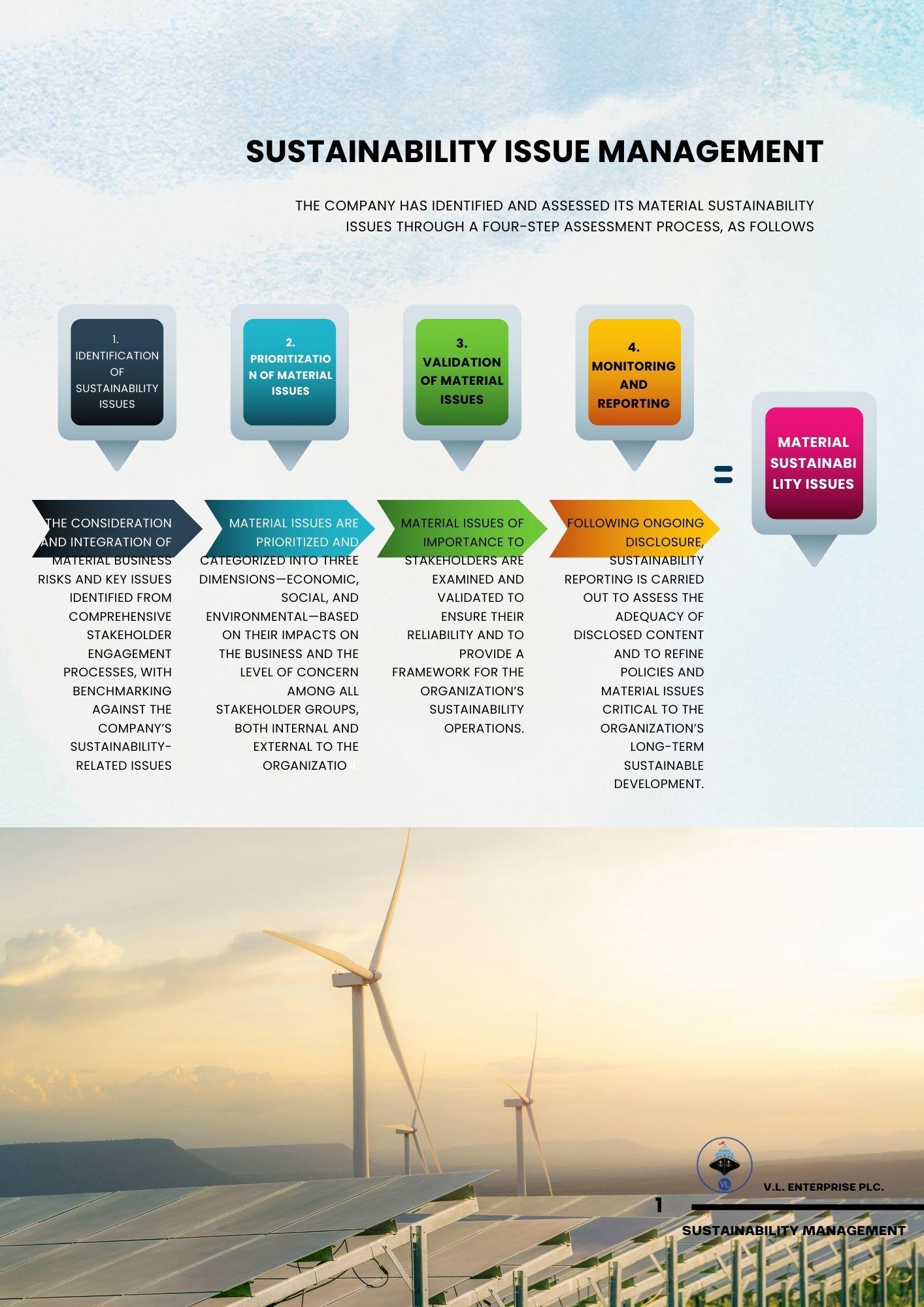
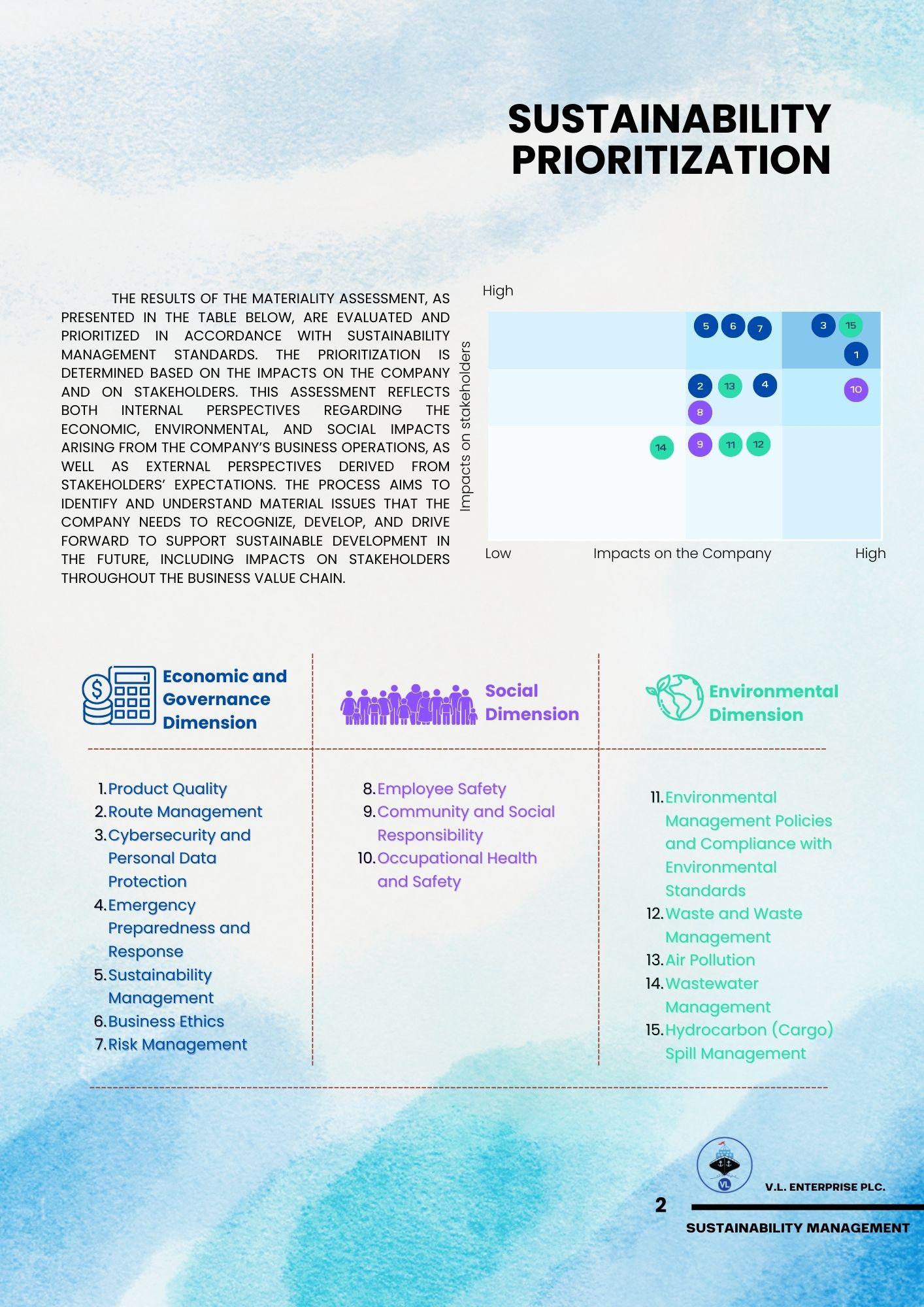
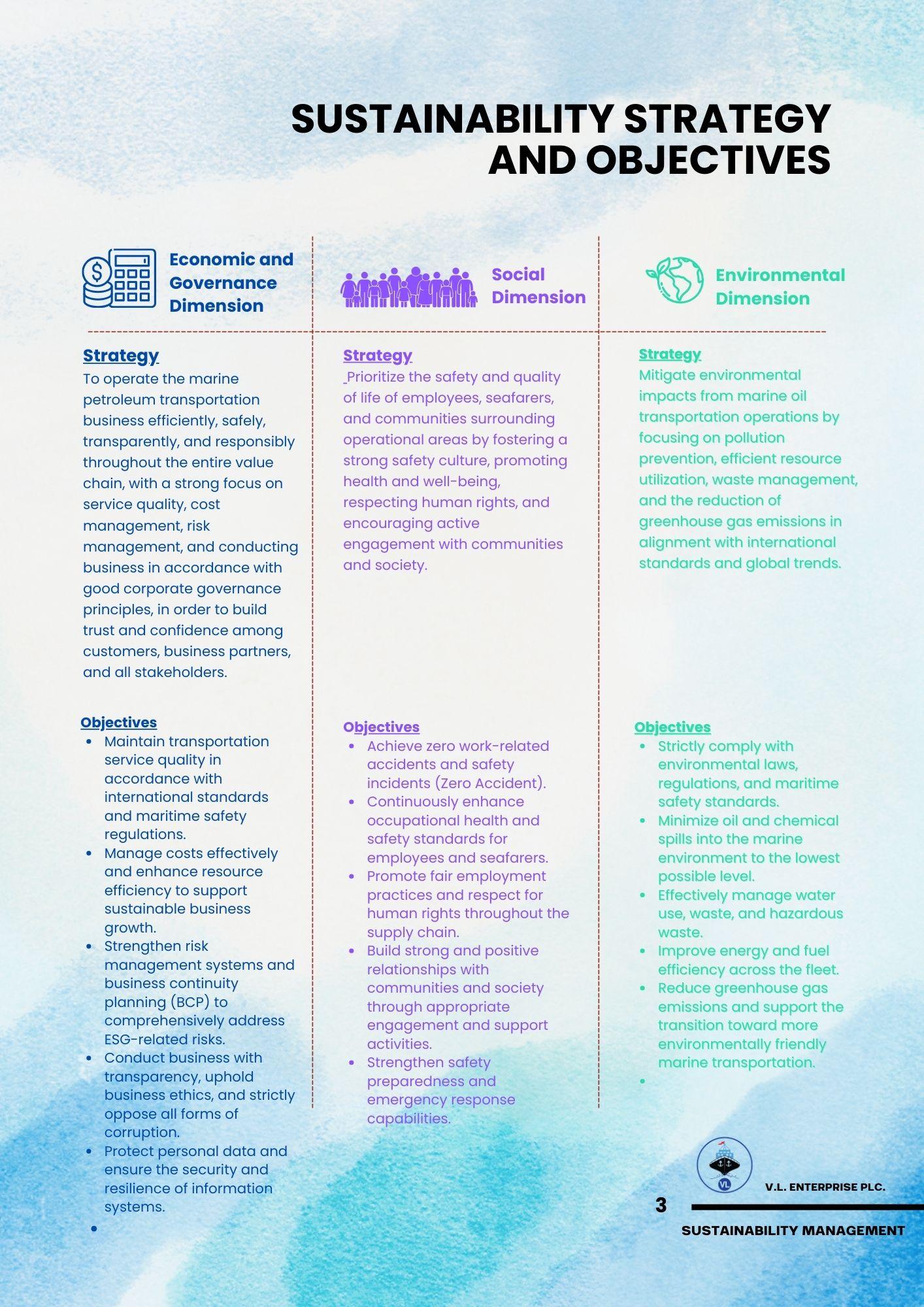
Based on the sustainability management plan outlined above, the Company has defined its operational objectives into short-term and long-term horizons as follows:
Short-term objectives
• Reducing greenhouse gas emissions by supporting waste reduction and sorting in transportation and operations.
• Promoting equality in the organization, fostering diversity and equality in the workplace.
• Developing employee skills to align with business principles and requirements.
• Promoting community engagement, collaborating with local communities to develop sustainable activities.
• Managing wastewater, liquids, and waste from ships in accordance with international regulations such as MARPOL Annex I, II, IIII, V, VI.
• Establishing safety standards for work, aiming for zero Man Injury. As of December 31, 2025, the company has a record of 8,097,307 safe working hours.
Long-term objectives
• Building a sustainable supply chain, coordinating with partners to use environmentally friendly materials and processes, and working with suppliers with sustainable practices.
• Collaborating with regulatory agencies to develop good environmental practices.
• Conserving marine biodiversity by controlling the discharge of ballast water to reduce the impact of transportation activities.
• Enhancing the circular economy in the oil transportation industry by supporting the recycling of end-of-life vessels according to international standards.
UN Sustainable Development Goals
| SDG Goal |
|---|
| Goal 3 Good Health and Well-being |
| Goal 4 Quality Education |
| Goal 4 Quality Education |
| Goal 5 Gender Equality |
| Goal 5 Gender Equality |
| Goal 13 Climate Action |
| Goal 13 Climate Action |
Policy Review
Policy Reviewed This Year
Yes
Policy Changed This Year
No
Review Details
The Company regularly reviews its sustainability management policy on an annual basis to ensure alignment with significant changes in relevant factors, including business growth, emerging sustainability trends, and applicable laws and standards. In 2025, the Company focused on establishing a strong foundation of sustainability knowledge and awareness among management and employees, in preparation for the further development of sustainability policies and long-term sustainability operations.
Business Value Chain
Value Chain Description
Strategic Management for Building Collaboration Among Companies, Various Agencies, Both Internal and External Organizations, and Stakeholders To enable seamless and continuous operations as a unified entity, maximizing efficiency in the highly competitive modern business landscape, which is characterized by rapid technological advancements and challenges, business chain management must be integrated and interdependent. The focus should be on collaboration and coordination in interrelated and interconnected activities to create added value. This process begins with transportation services and product delivery to customers, extending to after-sales service to maintain strong relationships with partners. Creating value or additional benefits follows a continuous sequence of value-creating processes, akin to a chain of interconnected activities, ultimately delivering the highest value in products or services for customers to utilize to their fullest advantage.
Stakeholder Analysis
Stakeholder Analysis
| Stakeholder Type | Stakeholders | Stakeholder Expectations | Response to Expectations | Communication Activities |
|---|---|---|---|---|
| Internal stakeholders | 2921 · Description: Employees | - Fair compensation, welfare, and benefits
- Career advancement and job security
- Job satisfaction
- Professional development and skills enhancement
- Safe working environment
- Corporate ethics and responsibility towards employees | - Safety Management System in accordance with the ISM Code
- Provident Fund
- Strict adherence to the Employment Policy
- Corporate Wellness and Sustainable Happiness Programs
- Career Path Development
- Compliance with Human Rights Policy
- Compliance with Personal Data Protection Policy
- Fair and Transparent Compensation and Performance Evaluation System | 2938 · Description: Visit · 2942 · Description: Internal Meeting · 2945 · Description: Complaint Reception · 2948 · Description: Training / Seminar |
| External stakeholders | 2923 · Description: Customers | - Responsiveness to Information Disclosure Requests
- Business Growth
- Business Ethics, Transparency, and Compliance
- Safe Working Environment
- Compliant Transportation Services
- Collaboration in Joint Operations | - Disclosure of information in a timely manner
- Strict adherence to anti-corruption policies
- Good corporate governance that is transparent, fair, and verifiable
- Safety management under the ISM Code system
- Strict compliance with laws and regulations of relevant agencies
- Oil tanker inspection and certification by the SIRE (Ship Inspection Report Exchange) program | 2938 · Description: Visit · 2945 · Description: Complaint Reception · 2947 · Description: Satisfaction Survey · 2949 · Other name: Annual Maintenance Plan Reporting and Emergency Plan Drills · Description: Others |
| External stakeholders | 2899 · Description: Suppliers | - Business ethics, transparency, and compliance
- Business growth
- Providing compliant transportation services
- Product quality and pricing
- Fair adherence to payment terms and conditions | - Strictly adhere to procurement, sourcing, and operational procedures.
- Comply with and promote the Anti-Corruption Policy.
- Uphold the "No Gift Policy."
- Compare and verify product quality and pricing for optimal value. | 2941 · Description: Online Communication · 2943 · Description: External Meeting · 2945 · Description: Complaint Reception · 2949 · Other name: Vendor evaluation · Description: Others · 2949 · Other name: Annual Report and Company Website · Description: Others |
| External stakeholders | 2918 · Description: Contractors | - Business ethics and transparency in service provision
- Maintenance in accordance with standards and regulations
- Fair and reasonable service fees | - Strictly adhere to procurement policies, sourcing procedures, and operational workflows.
- Develop annual maintenance plans.
- Comply with Harbor Department regulations for scheduled maintenance as required by law.
- Compare and verify service quality and pricing for optimal value. | 2943 · Description: External Meeting · 2949 · Other name: Annual Report and Company Website · Description: Others |
| External stakeholders | 2907 · Description: Specialists · 2936 · Other name: Marine Surveyor · Description: Others | - Corporate Governance and Business Transparency
- Business Growth
- Risk Management
- Vessel's Readiness
- Compliance with Maritime Laws and Regulations
- Environmental Consideration
- Building Transportation Confidence for the Company | - Accurately and completely answer questions posed by ship inspectors.
- Respond to documents requested by inspectors quickly and accurately.
- Seafarers with an understanding of correct work practices in accordance with international laws and regulations. | 2938 · Description: Visit · 2941 · Description: Online Communication · 2943 · Description: External Meeting |
| External stakeholders | 2902 · Description: Community | - Enhancing quality of life and promoting income generation for the community
- Mitigating potential social and environmental impacts resulting from the company's operations
- Ensuring safety of life and property
- Respecting the fundamental rights of the community | - Control of pollution by complying with MARPOL Annex I, II, IIII, V, VI
- Strictly comply with the Harbor Department's announcements.
- Comply with the human rights policy, which covers community rights. | 2938 · Description: Visit · 2940 · Description: Social Event · 2949 · Other name: Field visit and community engagement. · Description: Others · 2949 · Other name: Community Survey · Description: Others · 2949 · Other name: Annual Report and Company Website · Description: Others |
| External stakeholders | 2900 · Description: Business partners · 2918 · Description: Contractors | - Business ethics, transparency, and compliance
- Business growth
- Providing compliant transportation services | - Communication of guidelines and practices regarding corporate governance and business ethics
- Development of operational potential to enhance business growth opportunities
- Strict compliance with regulations and requirements for goods transportation
- Contractor's operations adhere to safety principles and/or have certified work standards (ISO, etc.)
- Timely and accurate completion of assigned tasks | 2938 · Description: Visit · 2941 · Description: Online Communication · 2943 · Description: External Meeting · 2949 · Other name: Meetings on various occasions · Description: Others |
| External stakeholders | 2913 · Description: Shareholders | - Business Transparency
- Internationally Recognized Reputation
- Business Performance and Growth
- Business Continuity
- Fair Returns to Shareholders and Investors
- Data Privacy Control of Shareholders, Investors, and Analysts
- Equal Opportunities
- Risk Management System | - Transparent, fair, and verifiable governance.
- Transparent and timely information disclosure.
- Sound monitoring and control systems.
- Appropriate dividend payments.
- Prudent risk management.
- Control of personal data of shareholders, investors, and analysts. | 2941 · Description: Online Communication · 2944 · Description: Annual General Meeting (AGM) · 2949 · Other name: Annual Report and Company Website · Description: Others · 2949 · Other name: Online Investor Relations · Description: Others · 2949 · Other name: Disclosure through the Market for Alternative Investment (MAI) · Description: Others |
| External stakeholders | 2929 · Description: Media | - Value creation for the economy and society
- Corporate governance and transparency
- Compliance with laws and regulations
- Responsiveness | - Online investor meetings (Opportunity Day)
- Accurate and timely disclosure of information about the event | 2949 · Other name: Annual Report and Company Website · Description: Others · 2949 · Other name: Online Investor Meeting (Opportunity Day) · Description: Others · 2949 · Other name: Interviews through various channels · Description: Others |
Environmental Sustainability — Overview
Operating Results — Introduction
The company has an environmental management policy to avoid causing marine pollution. In operations that may impact the environment, training related to the prevention of marine pollution on ships is mandatory and must be conducted in accordance with the methods and regulations of the International Convention for the Prevention of Pollution from Ships (MARPOL73/78). The company will clearly define onboard operational responsibilities, maintain records of all operational steps, and conduct regular random inspections of these records. Marine pollution prevention training includes:
Marine Pollution Prevention Training and Education
•Prevention of Marine Pollution ANNEX I
•Oil Spill Drill and Oil Spill Response Training to prevent spills into the sea
•Noxious Liquid Substances (NLS) ANNEX II
•Bilge Water (BILGE) Disposal in the Engine Room
•Packaged Dangerous Goods (DANGEROUS GOODS) ANNEX III
•Disposal of Slop (SLOP), Pump Room Water (PUMP ROOM), and Sludge (SLUDGE)
•Sewage Disposal ANNEX IV
•Cargo Vapor System and Emission of Fumes or Air Pollutants ANNEX VI
•Garbage Disposal Methods on Ships ANNEX V
•Volatile Organic Compounds (VOCs)
•Ballast Water Management Procedure
Environmental Activities
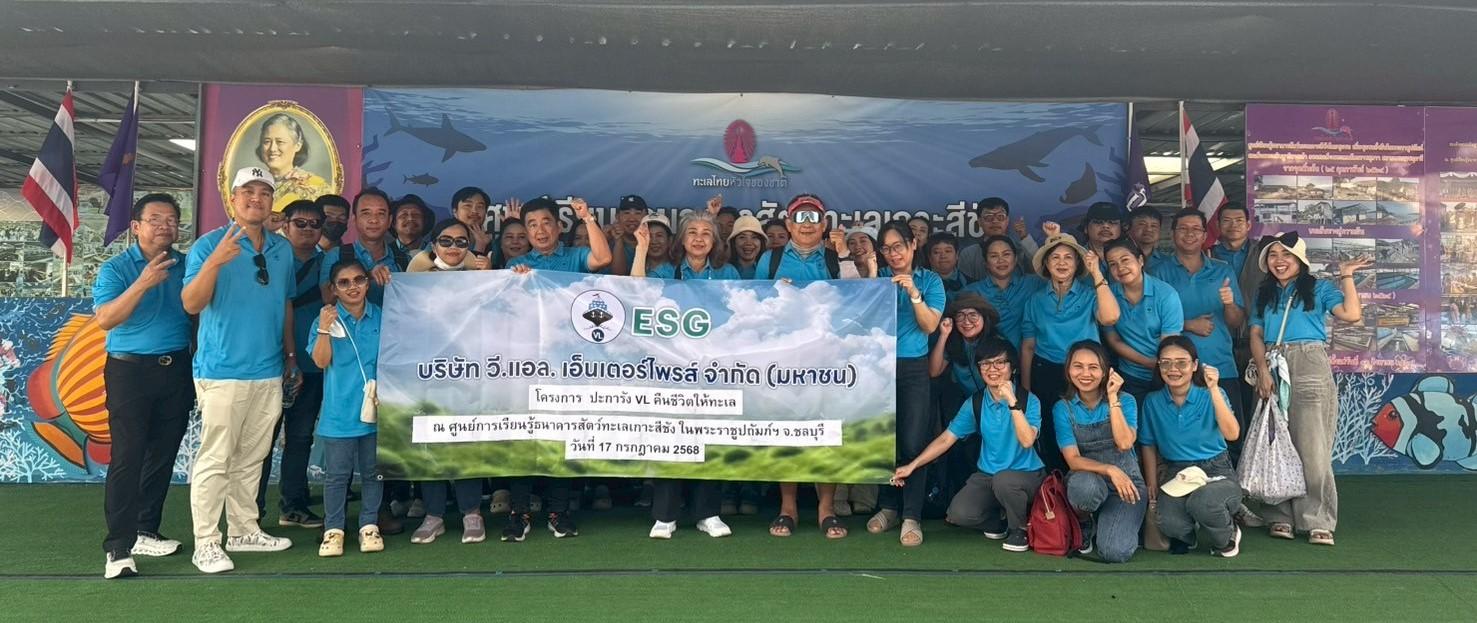
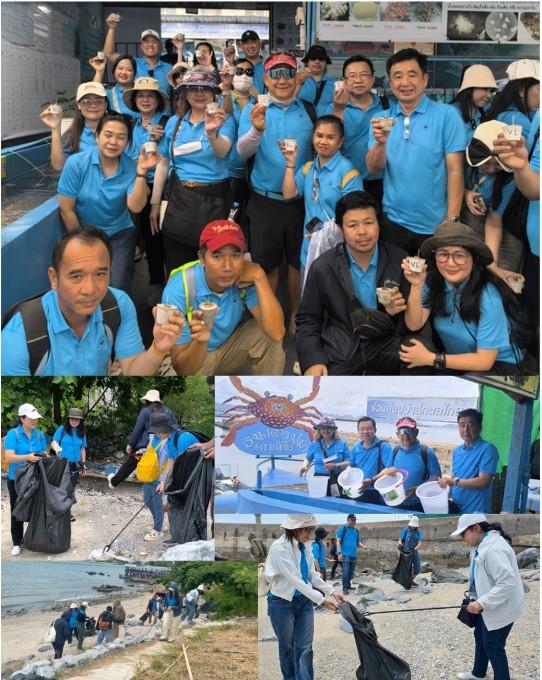
1. “VL Coral Restoration: Reviving the Sea”
On 17 July 2025, V.L. Enterprise Public Company Limited organized an environmental conservation activity entitled “VL Coral: Reviving Life to the Sea” at Koh Sichang, Chonburi Province. The activity brought together directors, executives, and employee volunteers to jointly engage in coral planting, marine animal release, and coastal clean-up activities, with the aim of restoring and enhancing the marine ecosystem.
This initiative went beyond environmental conservation, serving as a reaffirmation of the Company’s commitment to social and environmental responsibility, which is deeply embedded in its corporate culture. The Company recognizes that operations within the maritime transportation industry inevitably have environmental impacts, and therefore remains committed to creating a balance between business growth and the sustainable stewardship of marine and natural resources.
2. Forest Plantation Monitoring
The Company participated in a reforestation project in collaboration with listed companies on the Market for Alternative Investment (mai) to expand green areas and restore natural resources around the Mon Mae Thang Reservoir, Rong Kwang District, Phrae Province, on 11 June 2022. The project aims to increase forest area by a total of 65 rai.
Under this initiative, the Company contributed to the planting of 200 trees over an area of approximately 1 rai. The planted species include teak, makha mong, emblica (Indian gooseberry), and pride of India (Lagerstroemia), all of which are suitable for the local ecosystem and have strong potential for long-term carbon dioxide sequestration.
At present, the trees planted by the Company are healthy and show good growth performance, with an average height ranging from 1.5 to 3.0 meters and an average trunk circumference of approximately 7.9 centimeters. Based on carbon sequestration assessments, the reforested area is estimated to reduce greenhouse gas emissions by approximately 1,800 kilograms of carbon per year.
Reference: https://www.setsocialimpact.com/Article/Detail/77474
Environmental Policy & Guidelines
Has an Environmental Policy
Yes
Policy Description
The Company has a safety policy and an environmental policy in place to ensure the safety of its employees and to protect the environment from destruction. The Company recognizes the importance of the environment, economy, and society in which it operates. Therefore, the Company has established an environmental policy as follows:
V.L. Enterprise Public Company Limited, a liquid cargo ship management company, operates domestic and international sea freight transportation. It recognizes and prioritizes the environment as the company's policy to conduct business in a manner that balances the environment and the economic needs of the communities in which the company operates. The company will improve its environmental practices throughout the duration of its business. To achieve the objectives of this policy, the following actions will be taken:
1. Zero oil spill or toxic vapor leaks, minimize emissions in accordance with regulations.
2. Comply with applicable environmental laws and regulations. Even in the absence of applicable environmental laws or regulations, the Company will treat the environment responsibly and with standards.
3. Promote and support environmental awareness and respect. It will be emphasized that the duty to act appropriately towards the environment is the responsibility of all employees. and will ensure that it is actually implemented in the operation, including providing appropriate training.
4. Collaborate with government and industry groups to promote the development of effective environmental laws and regulations in a timely manner based on scientific appropriateness and consideration of risks, costs and revenues, including impacts on energy and product supply.
5. Manage the Company's business with the goal of preventing environmental incidents and minimizing waste disposal. Measures and procedures have been established to control and dispose of various wastes, including:
• Oil, chemicals and related products
• NLS Hazardous Substances
• Sewage
• Cargo vapors and engine exhaust
• Dangerous goods
• Garbage
• Ballast water
• Noise
6. Take immediate and effective action on incidents arising from business operations in collaboration with industry participants and government agencies with jurisdiction in this matter.
7. Share the Company's experiences with others to improve the environment for the industry.
8. Review and evaluate the Company's performance as appropriate to determine progress and to ensure compliance with environmental policies.
The International Safety Management (ISM) Code
In addition to the environmental policy, the Company has also developed a safety management system in the form of a document control system to comply with the requirements of the International Safety Management (ISM) Code and to be applied both at the office and on board ships. In order to ensure safety and prevent pollution, the Company has established other relevant policies as standards for conducting business, which are also considered the Company's main policies. The Company expects all employees to respect and comply with these policies to the highest standards in conducting business. All details are specified in "Various Policies" (0201-CS). Other relevant policies include:
1. Safety Policy
2. Environmental Policy
3. Alcohol and Drug Policy
4. Transportation Policy and Prevention of Goods Damage or Loss During Transportation
5. Security Policy
6. Sanitation Policy
7. Workplace Harassment Policy
8. Open Consultation and Feedback Policy
9. Safe Navigation Policy
10. Work and Rest Policy
11. Public Media Policy
12. Health, Safety, Security and Environmental Policy
13. Safety Stoppage Policy
International Safety Management Code (ISM Code)
Environmental conservation, which is an important part that may be directly affected by the Company's business operations. Therefore, the Company has adopted important measures. It has been adapted and developed to increase efficiency in environmental management, especially the reduction of carbon dioxide (CO2) emissions and fuel consumption in the shipping industry, which is regulated by the International Maritime Organization (IMO). It has issued measures as international guidelines for shipping companies. By using the Energy Efficiency Design Index ("EEDI") for new ships to comply with the IMO agreement and has issued the SEEMP manual to control fuel consumption on board and track the calculation of carbon dioxide (CO2) emissions. By calculating the standard values from the engine, speed, and weight of the ship, the results of the calculation are not the same for each voyage of the ship. Therefore, the Energy Efficiency Design Index (EEDI) has a standard calculation formula specific to the engine that the shipyard will calculate and will be specified in the engine specifications.
Ship Energy Efficiency Management Plan (SEEMP)
The International Maritime Organization (IMO) has established guidelines for the control of air pollution (Ship Energy Efficiency Management Plan) ("SEEMP") for use specifically in the shipping industry. The main objective of SEEMP is to improve the overall efficiency of ships in the long term by using correct and appropriate methods for energy saving and fuel consumption reduction. However, the International Maritime Organization (IMO) has not set standard values to be followed.
Therefore, the Company has set a target for efficient energy use as a standard for monitoring and controlling ship emissions with an average EEOI of 23.370 G/T-KM (43.212 G/T-NM) while loading and 39.729 G/T-KM (73.461 G/T-NM) of the total average (while loading and not loading). The company has therefore set an average of 49 G/T-NM per voyage as the company's standard to control emissions from exceeding the company's standards. For sustainable and effective management.
MARPOL 16973/1978: Marine Pollution Prevention International Convention DC 1973/1978
Many countries have established Emission Control Areas (ECAs) for sulfur content in ship fuel, such as North America and Northern Europe (not exceeding 0.1%), and China has announced sulfur control zones in three port areas: Yangtze, Pearl, and Bohai Bay, limiting sulfur to no more than 0.5%, effective from 2017. Ships that have to switch to using MGO or LSFO will incur higher costs and may affect profits if they are unable to pass the burden on to customers. The beneficiaries are refineries because this measure will result in a significant increase in demand for diesel, which is in the same group as LSFO and MGO, especially in the first 2-3 years until the fleet adapts to other better or cheaper methods. Refineries with a high proportion of diesel production will benefit greatly because refining margins will increase.
However, due to the intensification of US sanctions against Iran, it is predicted that oil prices in 2025 will remain volatile. While oil demand continues to increase, with key supporting factors being the US interest rate cut and China's economic stimulus measures. However, there are still risks in terms of trade wars from the policies of the new US president, which could have an impact on the global economy. It also resulted in Middle Eastern countries reducing production and limiting crude oil exports. Switching to low-sulfur fuels has also had several other impacts.
In other words, shippers will be sensitive to factors that affect fuel surcharges. Freight carriers will avoid using small vessels, most of which are not equipped with exhaust gas treatment systems or use older engines. The area between services will be reduced due to the retirement of outdated cargo ships and shipping lines that have adapted in advance and installed exhaust gas treatment systems in their fleets will have an advantage over other service providers.
IMO 2020 Standard
According to the IMO announcement, effective from 1 January 2020, the IMO 2020 measure was implemented, requiring tens of thousands of ships worldwide to switch from using fuel with sulfur emissions not exceeding 0.5% from the current 3.5% from the use of high sulfur fuel oil (HSFO) to low sulfur fuel oil not exceeding 0.5% (LSFO).
Comparing the use of High Sulfur and Low Sulfur fuel oil is important in the shipping industry as it affects the amount of emissions from ships and the pollution emitted from ships. It affects pollution control in engines and affects the comfort and safety of people in the area where the oil is pumped. Key comparative information between High Sulfur and Low Sulfur fuel oil includes:
1. Power and viscosity: High Sulfur fuel oil tends to have a higher viscosity than Low Sulfur, resulting in more incomplete combustion, resulting in significant emissions and pollutants.
2. Gas emissions: The use of High Sulfur fuel oil tends to result in higher emissions, especially sulfur dioxide (SOx), which has an impact on human health and the environment. While Low Sulfur will significantly reduce SOx emissions.
3. Price: The price of Low Sulfur fuel oil is generally higher than High Sulfur due to the production process and higher market demand due to laws and regulations on reducing emissions.
4. Ship's fuel oil consumption: The use of Low Sulfur fuel oil may require cleaning or the use of various technologies to prevent damage from the use of low viscosity oil.
5. Impact on the ship's fuel oil system: The use of Low Sulfur fuel oil may have an impact on damage to the engine or other operating systems on board. Therefore, changing the oil may require consideration of suitability and improvements to the engine system and other equipment on board.
In summary, LOW SULFUR oil has the advantage of reducing greenhouse gas emissions and pollution, but it is significantly more expensive than HIGH SULFUR and may have an impact on the price and fuel consumption of ships in some cases. Choosing the right fuel should therefore consider both economic efficiency and environmental impacts, as well as other relevant factors before making a decision.
Policy Document Link
https://vlenterprise.co.th/download/other_policies/0201-สร_นโยบายต่างๆ_R17(141122).pdf
Environmental Guidelines
| Guideline |
|---|
| Electricity Management |
| Fuel Management |
| Water Management |
| Waste Management |
Environmental Policy Review
Policy Reviewed This Year
No
Energy — Plan & Guidelines
Has an Energy Management Plan
Yes
Plan Description
The company has established 4 steps as follows:
1. Planning
Planning is the most crucial step in implementing SEEMP. Essentially, it determines the current state of the ship's energy consumption and how to reduce it. Current energy use will be carried out according to the voyage plan, which must include the ship's energy consumption in various forms, such as fuel consumption and the last dry docking.
2. Implementation
Identifying the various methods of implementing the measures selected during the ship's energy efficiency planning will consist of operational procedures and the roles and responsibilities of stakeholders (company representatives, crew members, etc.). There must also be a system in place during the planning stage to ensure the smooth implementation of SEEMP on board.
3. Observation
Once SEEMP is implemented on board, monitoring of the plan begins by observing the effectiveness of the implemented SEEMP. There are internationally standardized methods for verifying SEEMP effectiveness, such as EEOI, which is an indicator of energy efficiency performance that can be determined from the ship's fuel consumption over a voyage carrying a certain amount of cargo.
4. Evaluation and Self-Improvement
The results of the monitoring phase must be evaluated to understand the effectiveness of SEEMP, which will be carried out in the final stage. This stage relies on constructive feedback, which can be assessed to determine if the plan needs to be updated. If necessary, the same steps will be used to improve the planning, implementation, and monitoring phases. It is the responsibility of the crew to ensure that the results and reports from the various stages of the SEEMP system are monitored, evaluated, and used to inform the implementation of the plan.
These practices are specified in the Ship Energy Efficiency Management Plan (SEEMP) manual. An EO – Environment Officer was appointed on October 1, 2021, to be responsible for monitoring the fleet's operations as follows:
•Technical Superintendent acts as an inspector of onboard operations, records data accurately, and advises the captain on efficient energy use and pollution prevention. •Captains of all vessels act as EO: Environment Officer, taking care of and preventing pollution on board, such as Bilge - Sludge pumping / Air Pollution – EEOI Control / Change Over procedure / ETC.
For office operations, a working group was appointed on October 10, 2020, to oversee good governance and sustainable development activities. Their duties include managing, monitoring, and implementing the company's sustainable environmental goals. The company places importance on air pollution control, specifically carbon dioxide (CO2) emissions. To enhance the efficiency of emission control, the company has commissioned RINA SERVICES S.p.A. to certify engine efficiency and calculate the EEXI (Energy Efficiency Existing Ship Index). This index measures the fuel efficiency of existing ships. EEXI uses data on the size and characteristics of the ship, as well as the operational status of the engine and energy-related equipment, to calculate the ship's energy efficiency index. This ensures low CO2 emission levels for the company's fleet. New ships built after July 1, 2010, will be subject to the international standard MARPOL Annex 6. Tier II engines are designed for optimal combustion, measured by parameters monitored by the engine manufacturer, including fuel injection timing, pressure, and stroke (adjusting engine speed), fuel injector delivery, exhaust valve timing, and cylinder compression volume.
The calculation factors for gas emissions depend on distance, the usage rate of large machinery cycles, the paralleling of generators in the bilge for safe navigation, weather conditions, wind and waves on the shipping route to the south. The comparison from the above example led to the use of service providers with similar transportation characteristics. The method of managing CO2(t) emissions reduction is as follows: the company classifies the fleet using Tier I engines to be on the Mahachai, Bangkok, Maeklong, Phetchaburi, Bang Pakong, Sriracha, and Bandon routes, which take a short time per trip. The group of vessels using Tier II engines will be on the Songkhla and Rayong routes, which take longer per trip. This method is a result of ships traveling long distances. Tier II engines will be more effective in reducing CO2(t) emissions.
The Tier II engine standard pertains to ship engine emissions and is set by the International Maritime Organization (IMO). Its objective is to reduce ship emissions. Its main requirements involve reducing emissions from fuel combustion by setting limits on oxygen, nitrogen oxides, and greenhouse gases entering the engine for combustion. It mandates a reduction of at least 15% in pollutants compared to the Tier I standard of 2000. Using Tier II engines is mandatory when building new ships or upgrading existing ship engines to Tier II.
CO2 (t) emission ratio in 2025
Old ships use TIER I engines CO2(t) emissions: 14,587.212 (7 vessels)
New ships use TIER I engines I. CO2(t) emissions: 10,610.299 (5 vessels)
Comparison of CO2(t) emissions 2021 - 2025
2021 = 27,785 CO2(t) / 13 vessels
2022 = 26,350 CO2(t) / 12 vessels
2023 = 26,870 CO2(t) / 13 vessels
2024 = 24,797 CO2(t) / 13 vessels
2025 = 25,197 CO2(t) / 12 vessels
**In 2025, total CO2 emissions increased compared to 2024, as although the number of vessels in operation decreased, the number of transportation voyages increased, resulting in higher overall fuel consumption.
Fuel Management Initiatives in 2025
1. Fuel Consumption Monitoring and Hull Cleaning (Barnacle Removal)
This initiative aims to enhance vessel energy efficiency and reduce environmental impacts by lowering fuel consumption and greenhouse gas emissions. The Company integrates fuel consumption monitoring with routine hull condition inspections and scheduled barnacle removal as part of its maintenance program.
Biofouling organisms, such as barnacles, increase hull resistance and result in higher fuel consumption. Therefore, the Company analyzes fuel consumption data in conjunction with hull cleanliness conditions to determine optimal timing for hull cleaning, ensuring operational efficiency and effective energy management.
Fuel Consumption Monitoring System:
Continuously monitor fuel consumption and vessel speed on a regular basis.
Analyze fuel consumption trends to identify indications of increased drag resulting from hull conditions.
Set a target to reduce fuel consumption by 1–2% per year, based on the fuel consumption baseline in 2021.
Hull Cleaning Program
Conduct hull cleaning and barnacle removal when fuel efficiency declines or when significant biofouling is detected.
Utilize environmentally friendly cleaning methods and perform operations only in approved areas in compliance with relevant regulatory requirements.
2. Fuel Consumption Management
In the past year, the Company piloted the installation of a Fuel Consumption Management System integrated with Artificial Intelligence (AI) technology and onboard camera systems to enhance systematic, transparent, and verifiable fuel consumption control. The Company plans to complete the installation of the Fuel Consumption Management System across its entire fleet by 2028.
Under this system, the Company is able to monitor fuel consumption of each vessel in real time. Data collected from AI-enabled cameras is used to analyze navigation behavior, engine speed, and operational conditions that affect energy consumption. This enables the Company to improve voyage planning, optimize speed control, and adjust engine power to suit transportation conditions for each voyage. As a result, fuel consumption efficiency is enhanced, unnecessary fuel usage is reduced, and greenhouse gas emissions, such as carbon dioxide (CO2), as well as other air pollutants, are minimized. These efforts support the Company’s sustainable business operations and align with applicable regulatory requirements and guidelines, including IMO DCS and corporate environmental reporting standards.
3. Electricity Energy Conservation Campaign (Office)
The Company has continuously established and implemented energy management policies and measures, with a strong focus on improving electricity efficiency. Key initiatives include turning off lights during lunch breaks, controlling the operating hours of air-conditioning systems according to designated schedules, adjusting indoor temperatures to appropriate levels, and raising employee awareness of energy-saving practices and responsible energy use.
The Company has set a target to reduce electricity consumption by 5 percent by 2027, based on the 2022 baseline year.
Energy — Electricity Consumption
Electricity Consumption
| Metric | Current Year | Previous Year | Two Years Ago |
|---|---|---|---|
| Total electricity consumption within the organization (Kilowatt-Hours) | 76,868 | 89,574 | 78,393 |
| Electricity purchased for consumption from non-renewable energy sources (Kilowatt-Hours) | 76,868 | 89,574 | 78,393 |
| Electricity purchased or generated for consumption from renewable energy sources (Kilowatt-Hours) |
Energy — Fuel Consumption
Fuel Consumption
| Metric | Current Year | Previous Year | Two Years Ago |
|---|---|---|---|
| Crude oil (Barrels) | |||
| Coal (Metric tonnes) | |||
| Jet fuel (Litres) | |||
| Diesel (Litres) | 4,491,876.82 | 4,667,419.89 | 4,615,137.01 |
| Gasoline (Litres) | |||
| Fuel oil (Litres) | 5,223,848.8 | 5,633,244.22 | 5,010,303.87 |
| Natural gas (Standard cubic feet) | |||
| LPG (Kilograms) | |||
| Steam (Metric tonnes) |
Energy — Targets
Has Set Targets
Yes
Targets
| Target | Base Year | Base Year Value | Target Year | Target Year Value | Target Change (%) | Unit |
|---|---|---|---|---|---|---|
| Reduction of electricity purchased for consumption | 2,022 | 85,407 | 2,027 | 81,137 | 5 | Kilowatt-hour |
Energy — Performance & Outcomes
Has Performance Results
Yes
Performance Description
Energy Management Performance
The Company has continuously implemented energy management policies and measures, with a focus on improving electricity efficiency. Key initiatives include turning off lights during lunch breaks, controlling the operating hours of air-conditioning systems, adjusting indoor temperatures to appropriate levels, and promoting employee awareness of responsible and efficient energy use.
The Company set a target to reduce electricity consumption by 5 percent by 2027, based on the 2022 baseline year. Through regular monitoring and evaluation, it was found that during the period from January to December 2025, the Company’s electricity consumption decreased significantly, totaling 76,868 units, representing a 9.99 percent reduction compared to the baseline year, which exceeded the target set.
This performance reflects the effectiveness of the Company’s energy management measures, as well as the strong cooperation of management and employees at all levels in supporting energy conservation policies. As a result, the Company was able to achieve its electricity reduction target within 2025, ahead of the original timeline. Going forward, the Company remains committed to continuously enhancing its energy management initiatives to further improve energy efficiency, reduce operating costs, and minimize environmental impacts, thereby supporting sustainable business operations in the long term.
Water — Plan & Guidelines
Has a Water Management Plan
Yes
Plan Description
1. Water Management on Board Vessels
The Company places strong emphasis on preventing adverse impacts on the marine environment by strictly complying with the International Convention for the Prevention of Pollution from Ships (MARPOL). In particular, the Company focuses on the proper management of water generated from various onboard activities in order to control and reduce the risk of pollution discharge into the environment, including:
Management of oil-contaminated water (MARPOL Annex I)
Management of tank washing water and water related to chemical substances (MARPOL Annex II)
Supervision, Training, and Inspection
2. Water Management (Office Operations)
The Company conducts its business with due consideration for communities and the environment. Water used in office operations is supplied by local water authorities in each area, and the Company strictly controls the quality of wastewater discharged into external water sources to ensure compliance with applicable laws and regulations.
To enhance efficient water management, the Company regularly collects and monitors water consumption data in terms of usage units for evaluation and systematic planning of water conservation initiatives. The Company has set a target to reduce water consumption by 10% by the year 2027, using 2022 as the base year.
Water — Withdrawal, Discharge & Consumption
Water Withdrawal, Discharge & Consumption
| Metric | Current Year | Previous Year | Two Years Ago |
|---|---|---|---|
| Total water withdrawal (Cubic meters) | 804 | 682 | 735 |
| Total water withdrawal by third-party water (Cubic meters) | 804 | 682 | 735 |
| Total water withdrawal by surface water (Cubic meters) | |||
| Total water withdrawal by groundwater (Cubic meters) | |||
| Total water withdrawal by seawater (Cubic meters) | |||
| Total water withdrawal by produced water (Cubic meters) | |||
| Percentage of wastewater treated before discharge (%) | |||
| Total water discharge (Cubic meters) | |||
| Total water discharge to third-party water (Cubic meters) | |||
| Total water discharge to surface water (Cubic meters) | |||
| Total water discharge to groundwater (Cubic meters) | |||
| Total water discharge to seawater (Cubic meters) | |||
| Total water consumption (Cubic meters) | 804 | 682 | 735 |
| Recycled water (Cubic meters) | 0 | 0 | 0 |
Water — Targets
Has Set Targets
Yes
Targets
| Target | Base Year | Base Year Value | Target Year | Target Year Value | Target Change (%) | Unit |
|---|---|---|---|---|---|---|
| Reduction of water withdrawal | 2,022 | 736 | 2,027 | 662 | 10 | Cubic meters |
Water — Performance & Outcomes
Has Performance Results
Yes
Performance Description
1. Water Management on Board Vessels
The Company provides regular training for crew members on MARPOL requirements and proper water management procedures. In addition, the Company conducts internal audits as well as inspections in accordance with the requirements of the Flag State and Port State Control (PSC), to ensure that operations comply with international standards.
2. Water Management (Office Operations)
The Company has set a target to reduce water consumption by 10% by the year 2027, using 2022 as the base year.
However, in 2025, the Company experienced a significant increase in water consumption, particularly during April to May, due to a leakage of underground water pipes beneath the building. This incident was believed to be a consequence of the earthquake that occurred on 28 March 2025, resulting in unusually high water usage during that period. The Company has since completed the inspection and repair of the damaged water pipeline system and has enhanced water monitoring measures to prevent similar incidents in the future. Nevertheless, when considering overall water consumption for the year 2025, the Company was unable to achieve its water reduction target, as water usage increased by 9.23% compared to the base year.
Going forward, the Company will apply lessons learned from this incident to further improve the efficiency of its water resource management and will continue to develop and strengthen water management measures to achieve its targets within the designated timeframe.
Waste — Plan & Guidelines
Has a Waste Management Plan
Yes
Plan Description
The company prioritizes waste minimization. We focus on the efficient use of raw materials and production resources. When waste is generated, we strive to maximize reuse and recycling, considering the potential of each waste type and relevant regulations. This aims to minimize the amount of waste requiring treatment/disposal, making disposal the last resort. 3Rs
Reduce
- Reduce usage or use as little as necessary
- Reduce waste
– Reduce plastic bag usage
– Reduce foam container usage
– Use personal cups and containers
Reuse
- Reuse, maximize usage
– Donate or sell unused items
– Use both sides of the paper
– Buy reusable products
Recycle
– Separate recyclable waste The company will separate plastic waste for donation to organizations for recycling.
Waste — Generation, Disposal & Recycling
Waste Generation, Disposal & Recycling
| Metric | Current Year | Previous Year | Two Years Ago |
|---|---|---|---|
| Total waste generated (Kilograms) | 29,153 | 40,328 | 43,956 |
| Non-hazardous waste (Kilograms) | 12,382 | 18,015 | 4,968 |
| Non-hazardous waste - Landfilling (Kilograms) | |||
| Non-hazardous waste - Incineration (with energy recovery) (Kilograms) | |||
| Non-hazardous waste - Incineration (without energy recovery) (Kilograms) | |||
| Non-hazardous waste - Other disposal operations (Kilograms) | |||
| Hazardous waste (Kilograms) | 16,771 | 22,313 | 38,988 |
| Hazardous waste - Landfilling (Kilograms) | |||
| Hazardous waste - Incineration (with energy recovery) (Kilograms) | |||
| Hazardous waste - Incineration (without energy recovery) (Kilograms) | |||
| Hazardous waste - Other disposal operations (Kilograms) | |||
| Total reused/recycled waste (Kilograms) | |||
| Reused/Recycled non-hazardous waste (Kilograms) | |||
| Reused non-hazardous waste (Kilograms) | |||
| Recycled non-hazardous waste (Kilograms) | |||
| Reused/Recycled hazardous waste (Kilograms) | |||
| Reused hazardous waste (Kilograms) | |||
| Recycled hazardous waste (Kilograms) |
Waste — Targets
Has Set Targets
No
Waste — Performance & Outcomes
Has Performance Results
Yes
Performance Description
Waste Managment Performance
Donating Plastic Bottles to Recycle into Buddhist Robes
The Company promotes environmental initiatives by reducing plastic waste from drinking water bottles. Throughout 2025, the Company successfully sorted and collected a total of 3,488 plastic bottles, which were donated to Wat Chak Daeng, Samut Prakan Province. These bottles were processed and recycled into plastic fibers, which were then transformed into fabric for producing Buddhist robes, as well as other products such as painted fabric bags, plant pots, and garments. This initiative supports waste reduction through recycling while creating value-added products in a sustainable manner.
“VL Donates Old Calendars to Support the Visually Impaired”
The Company donated used calendars that would otherwise become waste to be recycled into Braille books, helping to expand learning opportunities for people with visual impairments. The donated calendars were delivered to the Foundation for the Blind in Thailand under the Royal Patronage of Her Majesty the Queen, as part of the “Old Calendars for the Blind” project, at Singha Complex on 21 January 2025. This activity reflects the Company’s commitment to resource efficiency, social inclusion, and sustainable value creation.
GHG — Plan & Guidelines
Has a GHG Management Plan
Yes
Plan Description
To address the mitigation of climate change impacts, which may affect business operations across all sectors, and to prepare for increasingly stringent environmental regulations in the future, the Company has joined the SET Carbon initiative. The Company is among the first 50 listed companies to adopt the Stock Exchange of Thailand’s SET Carbon system as a tool for managing, collecting, and calculating greenhouse gas emissions data from its business activities (Carbon Footprint for Organization: CFO). This initiative aims to enhance readiness for future data verification and assurance, as well as to support the establishment of targets for reducing greenhouse gas emissions going forward.
GHG — Emissions
GHG Emissions
| Metric | Current Year | Previous Year | Two Years Ago |
|---|---|---|---|
| Total GHG emissions (Metric tonnes of carbon dioxide equivalent) | 27,028.43 | 24,797 | 26,870 |
| Total greenhouse gas emissions 1 (Metric tonnes of carbon dioxide equivalent) | 26,990 | 24,797 | 26,870 |
| Total greenhouse gas emissions 2 (Metric tonnes of carbon dioxide equivalent) | 38.43 | 0 | 0 |
| Total greenhouse gas emissions 3 (Metric tonnes of carbon dioxide equivalent) | 0 | 0 | 0 |
GHG — Emissions Verification
Emissions Verified by a Third Party
No
GHG — Principles & Standards
Principles & Standards Applied
| Standard |
|---|
| 2671 |
GHG — Targets
Has Set GHG Targets
No
GHG — Performance & Outcomes
Has Performance Results
No
Performance Description
Greenhouse Gas Management Performance
Through its participation in the SET Carbon initiative of the Stock Exchange of Thailand, the Company has enhanced its greenhouse gas emissions data management in a more systematic manner. In 2025, the Company commenced the collection, consolidation, and calculation of greenhouse gas emissions arising from its business activities in accordance with the Carbon Footprint for Organization (CFO) approach, utilizing the SET Carbon platform consistently across the entire organization.
Participation in the SET Carbon initiative also strengthens the Company’s readiness for future data verification and assurance processes, while providing a critical foundation for setting clear targets and defining concrete strategies for the reduction of greenhouse gas emissions going forward. This reflects the Company’s commitment to responsible environmental management and supports its long-term sustainable growth objectives.
Environmental Legal Incidents
Legal Violation Incidents
| Metric | Current Year | Previous Year | Two Years Ago |
|---|---|---|---|
| Number of cases or incidents of legal violations or negative environmental impact (cases) | 0 | 0 | 0 |
Employees — Plan & Guidelines
Has an Employee Management Plan
Yes
Plan Description
1. Employee Training and Development The company has an annual training plan for both operational and office employees, aiming to train and develop more than 50% of employees each year. A Training Roadmap is implemented to systematically outline the personnel development path, enhancing employees' capabilities in alignment with the company's goals. This structured approach ensures employee career growth and contributes to the organization's success.
2. Promoting Employee Engagement and Participation The company actively promotes employee engagement and voluntary participation in various organizational activities to foster a strong sense of belonging and commitment. Employees are encouraged to collaborate and contribute to the organization's development. Opportunities are provided for employees at all levels to share their opinions and take part in year-round sustainability initiatives, reinforcing teamwork and unity within the organization.
3. Workplace Safety and Occupational Health The company ensures that all employees receive safety training before commencing work and provides additional workplace safety education at least twice a year. These measures help maintain a safe and healthy work environment, ensuring compliance with occupational health and safety standards.
Plan Areas
| Plan Area |
|---|
| Employee training and development |
| Promoting employee relations and participation |
| Occupational health and safety in workplace |
Employees — Workforce
Workforce Data
| Metric | Current Year | Previous Year | Two Years Ago |
|---|---|---|---|
| Total number of employees (Persons) | 262 | 283 | 268 |
| Number of male employees (Persons) | 240 | 259 | 245 |
| Number of female employees (Persons) | 22 | 24 | 23 |
| Total employment of disabled persons (people) | 2 | 2 | 2 |
| Total disabled employees (people) | 2 | 2 | 2 |
| Total male disabled employees (people) | 0 | 0 | 1 |
| Total female disabled employees (people) | 2 | 2 | 1 |
| Total disabled workers who are non-employee (people) | 0 | 0 | 0 |
| Contributions to the fund for promoting and improving the quality of life for disabled persons | 0 | 0 | 0 |
| Total number of male employees in operational level (Persons) | 236 | 255 | 241 |
| Total number of male employees in management level (Persons) | 2 | 2 | 2 |
| Total number of male employees in executive level (Persons) | 2 | 2 | 2 |
| Total number of female employees in operational level (Persons) | 19 | 20 | 19 |
| Total number of female employees in management level (Persons) | 2 | 2 | 2 |
| Total number of female employees in executive level (Persons) | 1 | 2 | 2 |
Employees — Remuneration & Provident Fund
Remuneration & Provident Fund
| Metric | Current Year | Previous Year | Two Years Ago |
|---|---|---|---|
| Total disabled employees (people) | 141,841,400.12 | 152,046,467.43 | 140,682,809.42 |
| Total male employee remuneration (Baht) | |||
| Total female employee remuneration (Baht) | |||
| Number of employees eligible to participate in PVD (persons) | 210 | 207 | 213 |
| Total number of employees joining employee provident fund (Persons) | 173 | 156 | 144 |
| Percentage of total number of employees joining employee provident fund to total number of employees (%) | 66.03 | 55.12 | 53.73 |
| Number of PVD members / Total eligible employees (%) | 82.38 | 75.36 | 67.61 |
| Total amount of provident fund contributed by the Company (Baht) | 2,032,653 | 1,905,398 | 1,790,046 |
| Total amount of provident fund contributed by employee (baht) |
Employees — Training & Development
Training Data
| Metric | Current Year | Previous Year | Two Years Ago |
|---|---|---|---|
| Average employee training hours (Hours / Person / Year) | 8 | 6 | 8 |
| Employee development and training expenses (baht) | 88,890 | 225,100.18 | 547,339.08 |
Employees — Occupational Health & Safety
Occupational Health & Safety Data
| Metric | Current Year | Previous Year | Two Years Ago |
|---|---|---|---|
| Total number of lost time injury incidents by employees (Cases) | 0 | 0 | 0 |
Employees — Labour Relations
Labour Relations Data
| Metric | Current Year | Previous Year | Two Years Ago |
|---|---|---|---|
| Total voluntary resignations (Persons) | 70 | 98 | 96 |
| Male employees who voluntary resigned (Persons) | 69 | 93 | 96 |
| Female employees who voluntary resigned (Persons) | 1 | 5 | 0 |
| Percentage of employee turnover leaving the Company voluntarily (%) | 26.72 | 34.63 | 35.82 |
| Evaluation result of employee engagement | 0 | 0 | 0 |
Employees — Employee Representation
Employees Are Represented Collectively
No
Employees — Targets
Has Set Employee Targets
No
Employees — Performance & Outcomes
Has Performance Results
Yes
Performance Description
Performance and Outcomes in Employee and Labor Management
The Company adheres to policies and practices for providing fair, appropriate, and performance-based compensation to employees, aligned with the overall performance of the organization. Such compensation is determined based on clear, transparent, and verifiable criteria. The Company has established Key Performance Indicators (KPIs) as a basis for annual performance evaluations, which are used in considering salary adjustments and annual bonus payments for employees. These considerations are made in accordance with the results of the annual performance evaluation for the year 2025 and are strictly compliant with the Company’s regulations and policies.
In addition, the Company places strong emphasis on enhancing employees’ quality of life, well-being, and holistic capability development through various projects and activities aimed at promoting physical health, mental well-being, and overall quality of life (Health and Well-being). These initiatives are designed to foster a working environment that supports sustainable growth for both employees and the organization in the long term, as detailed below.
1. VL E-Learning Program: Enhancing Knowledge and Capability (Phase 1)
In 2025, the Company recognized the importance of sustainable growth and therefore collaborated with the Stock Exchange of Thailand to implement an E-Learning program aimed at enhancing employee capabilities. The program focuses on strengthening knowledge and understanding of Environmental, Social, and Governance (ESG) principles, as well as improving management and administrative competencies, which serve as a fundamental foundation for driving business operations in alignment with sustainable environmental, social, and governance practices.
Phase 1 of the program was conducted from 1 June to 31 August 2025 and consisted of a total of 10 courses. Of these, 80% focused on sustainability-related topics, while the remaining 20% emphasized personal development. Executives and head office employees participated in the training and completed assessments through the SET Member system, with a total of 38 participants achieving a 100% course completion rate.
2. Cyber Security Awareness Training
To demonstrate the commitment of V.L. Enterprise Public Company Limited to sustainable business operations and to foster a culture of risk management throughout the organization, the Company organized a Cyber Security Awareness training program. The training aimed to enhance knowledge, understanding, and awareness of cybersecurity risks. The program was attended by the Company’s directors, senior executives, and employees across the organization on Monday, 13 January 2025.
3. VL Badminton Relationship-Building Program
The “VL Badminton Relationship-Building” program was organized to promote good health and strengthen relationships among executives and employees. The activity is held every other Friday to encourage regular exercise and enhance teamwork. In 2025, the program was conducted a total of 21 times. This initiative reflects the Company’s commitment to promoting employees’ quality of work life in a holistic manner, encompassing physical health, mental well-being, and positive workplace relationships, as part of its ongoing Health & Well-being strategy to create a healthy and sustainable working environment.
4. VL Empower & Energize Program
This program was designed to help employees start each week with positive energy through nutritious meals. The Company provides lunch for employees every Monday, reflecting its commitment to caring for employees’ well-being both physically and mentally. The initiative aims to ensure that employees are energized and motivated to work efficiently, based on the belief that employee happiness is the foundation of a strong and resilient organization.
5. Relax and Restore Program (Therapeutic Massage)
The Company provides wellness massage services delivered by professionally trained visually impaired massage therapists to help relieve physical fatigue, reduce stress, and promote overall well-being among employees. At the same time, this initiative supports stable employment and income opportunities for persons with visual impairments, enabling them to participate in society with dignity. This program reflects the Company’s commitment to social responsibility (CSR) and the promotion of employee well-being within the organization.
6. Assistance Program for Employees Affected by Flooding
(Hat Yai District, Songkhla Province)
The Company places great importance on comprehensive employee care, particularly during unforeseen events that may affect employees’ livelihoods and quality of life. In late 2025, continuous heavy rainfall in Hat Yai District, Songkhla Province, resulted in severe flooding that caused damage to the homes, families, and living conditions of some employees.
In response, the Company implemented an assistance program for employees affected by the flooding, providing support to four employees. Executives and employees jointly contributed donations totaling THB 31,500 to help alleviate hardship and support recovery efforts. This initiative reflects the Company’s compassion and concern for its employees and reinforces an organizational culture that values employees as a key asset, forming a strong foundation for organizational resilience and sustainable long-term growth.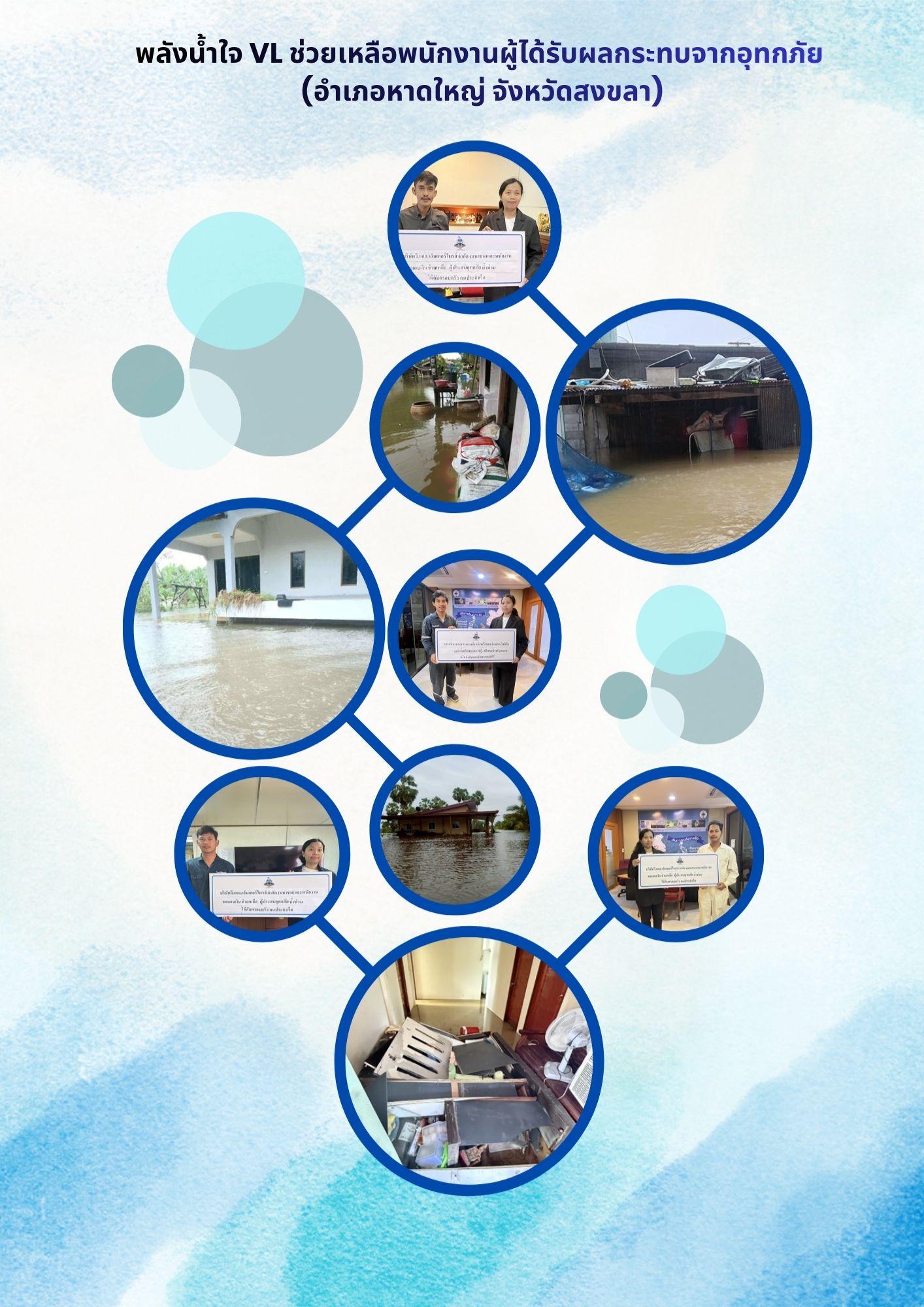
Customers — Plan & Guidelines
Has a Customer Management Plan
Yes
Plan Description
Customer Satisfaction and Relationship Management Customer satisfaction and strong relationships have always been a top priority for the company throughout its business operations. Customer feedback and needs serve as key insights in shaping the company’s strategic direction, ensuring long-term retention of existing clients—many of whom have been trusted business partners for years. By continuously enhancing service quality, addressing customer needs, and building trust, the company strengthens its foundation for sustainable business growth. To achieve this, the company conducts customer satisfaction surveys to gather valuable feedback, enabling continuous improvement and better responsiveness to client expectations. These insights also help identify new opportunities for operational planning and expanding the customer base effectively.
Plan Areas
| Plan Area |
|---|
| Development of customer satisfaction and customer relationship |
Customers — Satisfaction Results
Customer Satisfaction Results
| Metric | Current Year | Previous Year | Two Years Ago |
|---|---|---|---|
| Evaluation results of customer satisfaction | 1 | 1 | 1 |
Customers — Targets
Has Set Customer Targets
No
Customers — Performance & Outcomes
Has Performance Results
No
Community & Social — Plan & Guidelines
Has a Community & Social Plan
Yes
Plan Description
Commitment to Community and Social Development The company recognizes the importance of contributing to the strength and sustainable development of communities and society, as these factors play a crucial role in supporting its business operations. To uphold this commitment, the company actively engages in social initiatives and community empowerment programs. These efforts include promoting education and human resource development, fostering employment opportunities, and implementing various community development projects. Additionally, the company is dedicated to preserving local culture and traditions, ensuring that all activities align with the principles of sustainable development and the company’s long-term vision. By integrating these initiatives into its operations, the company aims to create lasting value for society, local communities, and all stakeholders, fostering sustainable growth and positive social impact.
Plan Areas
| Plan Area |
|---|
| Disadvantaged and vulnerable groups |
Community & Social — Targets
Has Set Community & Social Targets
No
Community & Social — Performance & Outcomes
Has Performance Results
Yes
Performance Description
1. VL Organizes Recreational Activities for the Elderly in Din Daeng On May 19, 2024, Ms. Chutipa Klinsuwan, Chief Executive Officer, along with company employees, organized recreational activities for the elderly in Din Daeng, Bangkok. This initiative aimed to promote self-worth, encourage healthy aging, and support longer, happier lives for senior citizens.
2. School Building Renovation Project in Collaboration with TCP V.L. Enterprise Public Company Limited, led by Ms. Chutipa Klinsuwan, Chief Executive Officer, alongside company directors, employees, and business partners from TOA - CHUGOKU PAINTS CO., LTD., joined forces to carry out a social responsibility and sustainability initiative. The project involved renovating and repainting school buildings to enhance the quality of educational facilities and create a better learning environment. This initiative took place at Khlong Ta Cha School in Samut Songkhram Province on July 6, 2024.
Law Violation Incidents
Law Violation Incidents
| Metric | Current Year | Previous Year | Two Years Ago |
|---|---|---|---|
| The total number of cases or incidents of significant violations of laws or regulations regarding social and human rights (Cases) | 0 | 0 | 0 |
| The total number of cases or incidents that cause significant labor disputes (Cases) | 0 | 0 | 0 |
| The total number of cases or complaints related to consumer rights violations (Cases) | 0 | 0 | 0 |
| The total number of cases or complaints related to partner rights violations (Cases) | 0 | 0 | 0 |
| The total number of cases or incidents that cause disputes with the community/society (Cases) | 0 | 0 | 0 |
| The total number of cases or incidents related to cyber security or customer data breaches (Cases) | 0 | 0 | 0 |
| The total number of cases or incidents related to safety and occupational health at work (Cases) | 0 | 0 | 0 |